

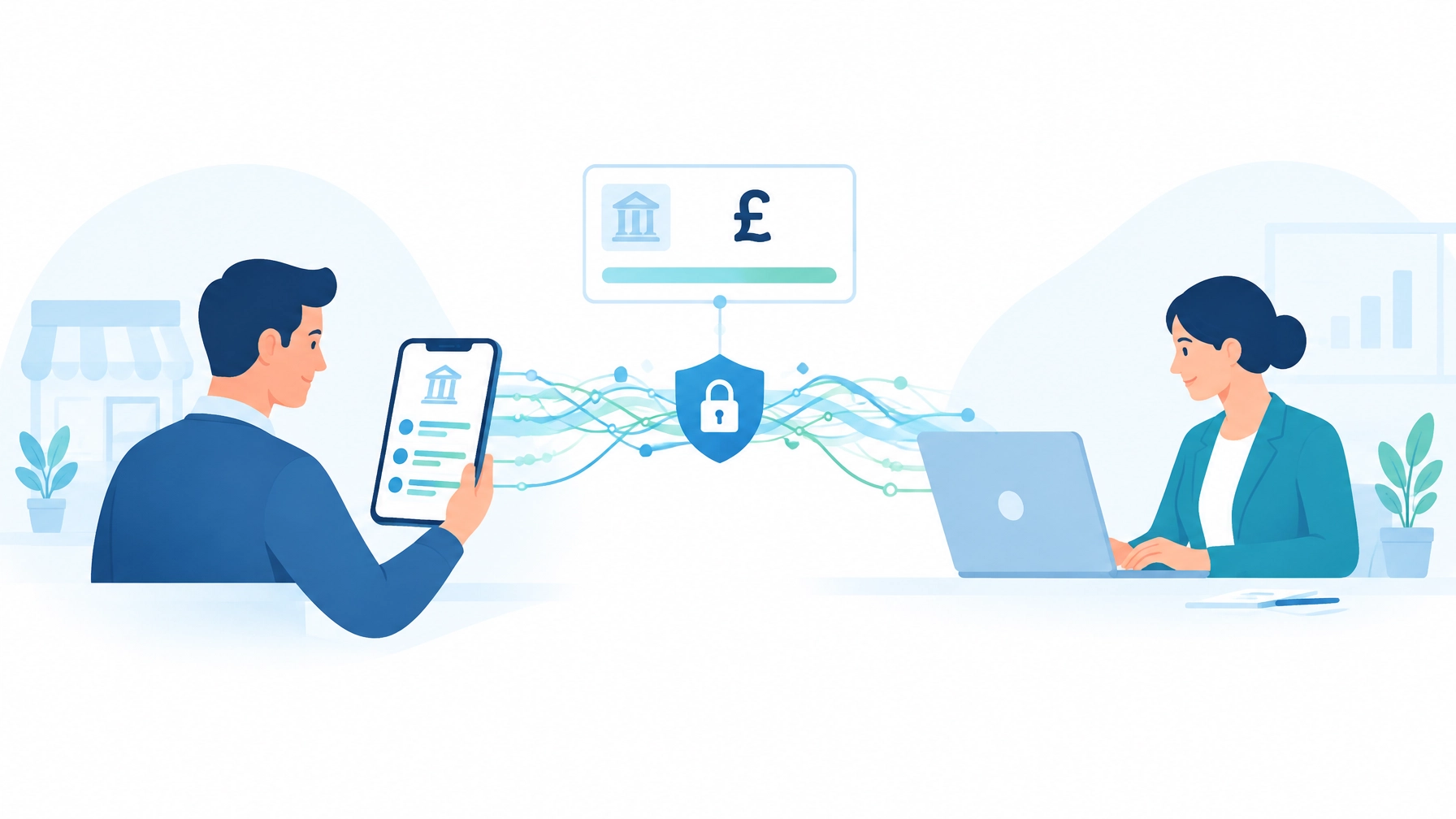
Open Banking has quietly changed how many lenders assess business loan applications. Instead of a director downloading and emailing months of PDF statements, a secure, read-only connection lets the lender see the business bank account directly, with the director's permission.
As a broker, we use it every week. Here is how an Open Banking loan application fits into the journey with SME Finance Hub, what an underwriter actually sees, and why the conversation with your broker still matters.
Step 1: You enquire and a named broker reviews it
The journey starts with our online application form. A named broker picks up your enquiry, reviews the information and gets in touch, usually by phone and email, to talk through what the business needs and what it can comfortably repay.
We will usually ask for the company's last six months of business bank statements and latest full accounts. That lets us carry out a proper review ourselves and look at every suitable option across our specialist lender panel, rather than sending you to the first lender that might say yes.

Step 2: Where Open Banking comes in
On a standard application, Open Banking usually comes in once your broker has found a lender they believe suits the business, and is confident the business fits that lender's criteria.
From there, it is simple:
- Your broker completes the lender's online application.
- You receive a link from the lender or from us.
- You follow the link and sign in securely through your own bank.
- You approve read-only access to the business account.
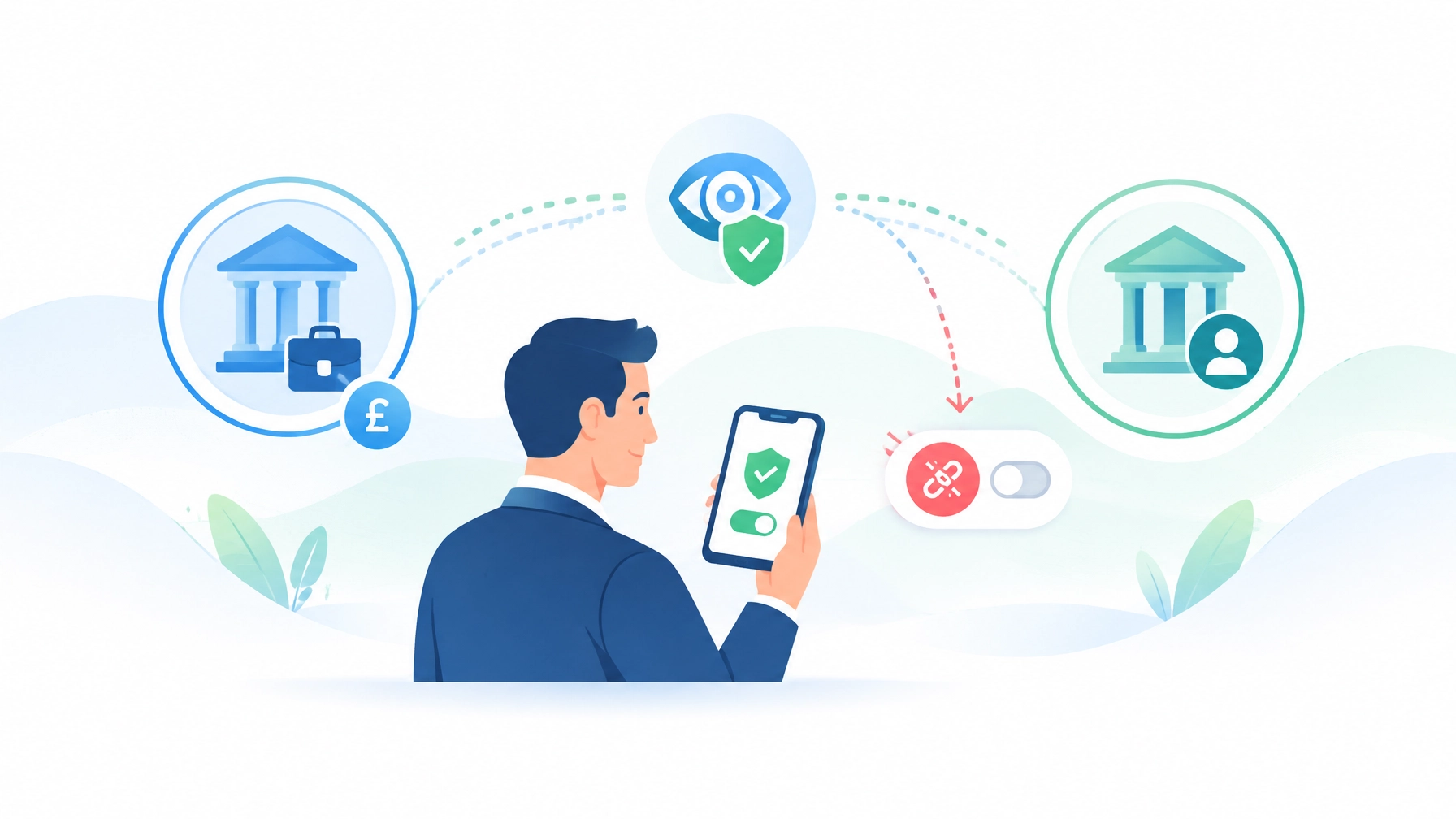
Read-only means exactly that. The lender can view the account information you have agreed to share. It cannot make payments, move money or change anything on the account. You stay in control: access is read-only and time-limited.
Companies that access account data in this way must be authorised or registered with the FCA. The FCA's guide to account information services explains what to expect.
Step 3: What can an underwriter see?
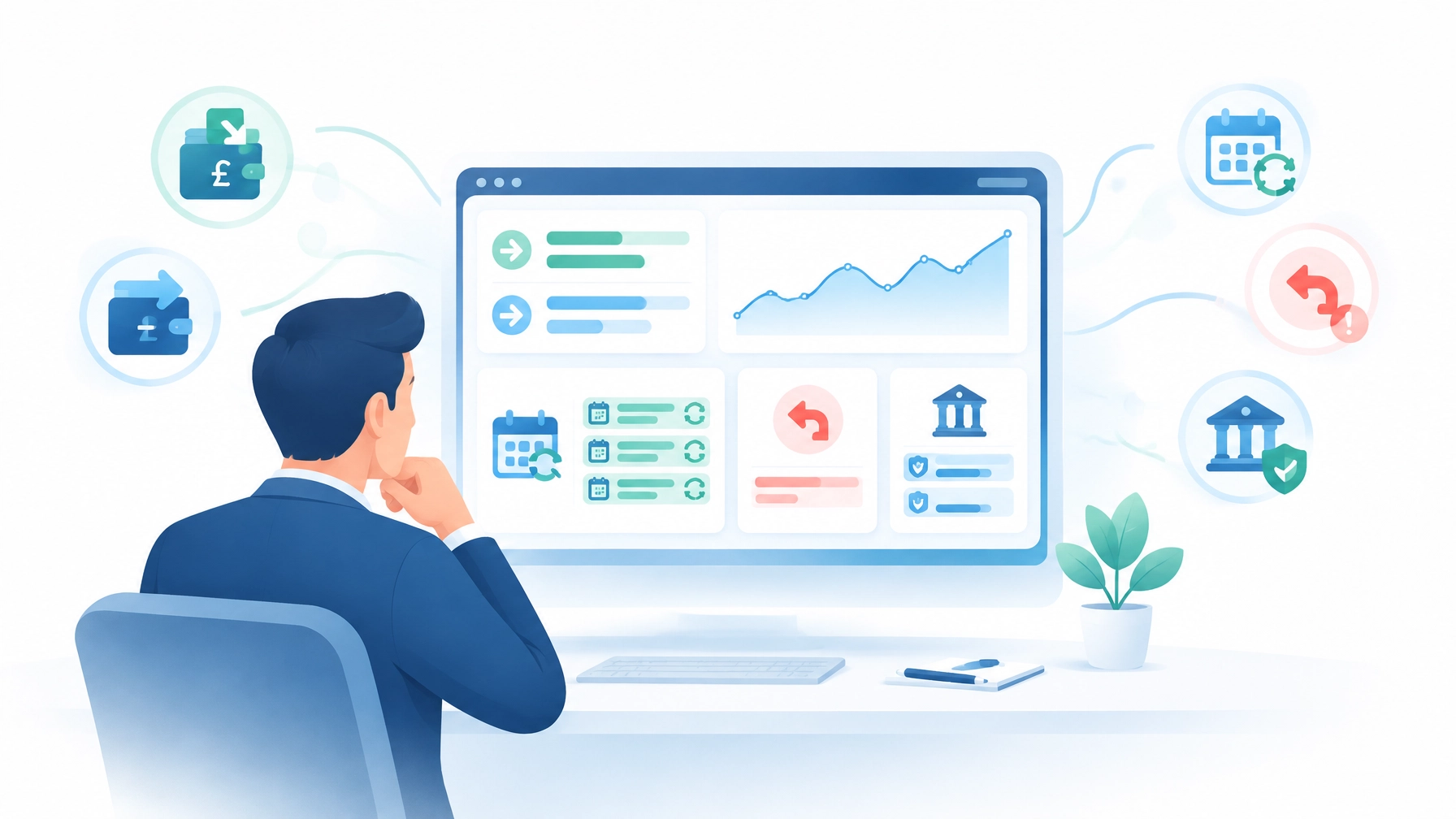
Open Banking lets a lender's software read your bank statements in seconds. It typically shows:
- money coming in and going out, and the patterns in income and spending
- average daily balances and how they move through the month
- the number of transactions
- missed payments and returned direct debits
- other lenders already being repaid from the account
- how often the account holds enough to cover the proposed monthly repayment
All of this helps the lender assess affordability properly. Lenders that do not use Open Banking often build the same picture another way, using software that scans uploaded PDF statements or an experienced underwriter reading them by hand.
Why lenders like Open Banking, and how it helps you
Speed. The data arrives in a form the lender's systems can read straight away, which usually means a quicker decision.
A properly checked loan. Affordability is assessed on real, recent account activity, which gives everyone more confidence that any offer fits what the business can repay.
Protection against fraud. It confirms the bank account is genuine and that the director applying has access to it. Altered bank statements are rare, but they do happen in finance, and lenders and brokers have to protect against them. A direct connection to the bank removes that risk.
The lender still makes its own decision, alongside its other checks such as credit history and accounts.
How long does a lender keep access?
Most lenders only have access for a set period while they assess the application. Once that is done, you can usually remove the connection yourself in your banking app. We'd simply suggest waiting until the lender has finished assessing before removing a connection.
Some lenders do things differently. Nucleus Commercial Finance, for example, will only review a proposal once the client has connected through Open Banking, and asks the business to stay connected for the life of the loan. That is less common, but it shows how differently lenders now approach this. Your broker will tell you what a lender expects before you connect.
Can you apply without sending bank statements?
In some cases, yes. We work with lenders that can make an automated decision purely from the information on our application form, and with lenders that combine that information with an Open Banking connection. We have completed many deals this way.
Even so, we will normally still ask for your bank statements and accounts, so we can carry out our own review and consider every option available. But we work case by case and in your best interests. If you are under time pressure and cannot get hold of statements straight away, we can prioritise lenders that use Open Banking.
Open Banking and fast business loans
Open Banking is used most when time matters, for example when a business needs a fast business loan or is hoping for same-day funding.
In those cases we run two routes side by side:
- we send the proposal to two lenders whose automated systems can assess it straight from our application form, and
- we send Open Banking links from two or three suitable lenders, so their systems can start reviewing your live account data as soon as you connect.
Running both together is purely about getting the fastest decision possible. You can read about three recent fast business loans we arranged, including a £15,000 loan through Nucleus Commercial Finance.
Outside urgent cases, we avoid sending you to several lenders that all need an Open Banking connection, because that just adds admin for you. Your broker suggests a connection where it is needed and where it strengthens the proposal.
Why a conversation with your broker still matters
Open Banking shows what has happened in the account. It does not always tell the full story.
Cash flow might look tight, but several invoices are due to be paid in the next few weeks. A loan with a high monthly payment might be ending soon. Or you may have just cut costs that are not showing in the statements yet.
That is exactly why we talk to you about the business. With the full picture, we can approach lenders that understand those circumstances and can take them into account in their offers.
Common questions about Open Banking and business loans
Does connecting Open Banking affect my credit score?
No. Connecting Open Banking is a permission to share account data, not a credit search, so it has no effect on your credit score. Credit searches are a separate step. Enquiring with SME Finance Hub involves no hard search and has no impact on your score; where a check is used early on, it is typically a soft search. If a hard search is needed, your broker will tell you beforehand. This usually happens much later in the process, once you have accepted a lender's offer.
Can the lender take money from my account?
No. The connection is read-only. The lender can view the account information you have agreed to share, but it cannot make payments, move money or change anything on the account.
Can my loan be declined because of Open Banking?
Not because of the connection itself. Open Banking shows the lender the same account activity your bank statements would, just faster. The decision still comes down to affordability and the lender's own criteria. If the account shows tighter periods or existing repayments, your broker can explain the background to the lender, or look at other lenders better suited to your circumstances.
How long does access last, and can I cancel it?
It varies by lender. Some connections last 24 hours, others a few days to a week, and a few lenders, such as Nucleus, ask you to stay connected for the life of the loan. You can usually remove a connection in your banking app. If a lender is still assessing your application, check with your broker first, as removing access could hold things up.
Do I have to use Open Banking to apply?
No. Many lenders assess applications using bank statements instead. Some, such as Nucleus, do need an Open Banking connection to review a proposal, and some lenders ask for one before paying out. Your broker will explain what each lender needs and guide you through it.
Talk to a broker about your options
Enquiring with SME Finance Hub involves no hard search and has no impact on your credit score. There are no upfront broker fees and no obligation to proceed. Any commission is paid by the lender and disclosed before you commit.
SME Finance Hub is a trading style of Capital Business Loans Limited, an FCA-authorised credit broker, not a lender. Call 01244 906505, email hello@smefinancehub.co.uk or start with our online application form. If you need funding quickly, see our fast business loans page.